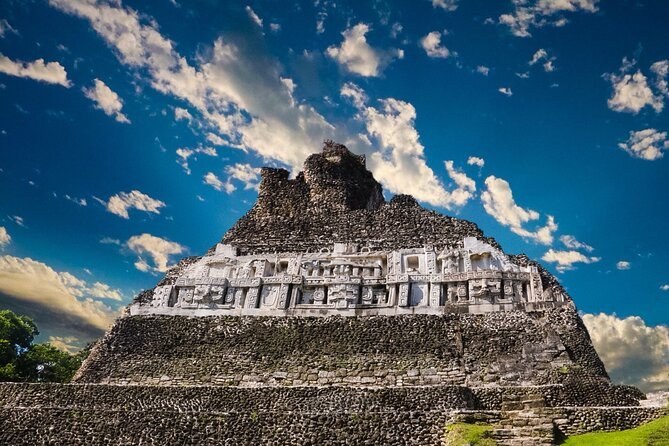
The Best Time to Visit Xunantunich
Short answer. February and March for dry ground and clear light; October if you want the plazas empty and do not mind rain clearing through. Time of day matters more than month on an unshaded ridge: be on the first ferry, whatever the season.
Xunantunich is open every day of the year and the weather never closes it. What the season changes is how hard the climb is, how green the valley looks from the top, and whether the cave-tubing half of a combination day actually runs. Here is the year, and how Belize Xunantunich tour sit inside it.
What is the single best time to go?
Eight in the morning, in February. Dry ground, cool air on the climb, low light across the frieze and almost nobody on the plazas. If you cannot manage February, the first ferry of any morning gets you most of the way there.
The month matters less than the hour, which is the opposite of what most seasonal advice implies.
Dry season or wet season?
| Dry (Dec–May) | Wet (Jun–Nov) | |
|---|---|---|
| Rain | Little | Heavy afternoon showers, sometimes all day |
| Heat | Building through March and April | Hot and humid throughout |
| Crowds | Busiest, especially Dec–Feb | Quiet; October emptiest |
| Ground | Firm | Grass slippery after rain |
| Cave tubing | Reliable; lowest water in March | Can be cancelled and refunded |
| The ferry | Reliable | Can stop on high water, Sep–Nov |
| Views west | Clearest in December | Often best just after a storm clears |
| Booking window | A week over Christmas and Easter | A few days |
Which months are hottest?
March, April and May, with April the peak. Afternoons reach the low thirties Celsius and the plazas have no shade at all, so the climb up El Castillo in the middle of an April day is genuinely hard work.
The fix is simple and free: take the morning departure. Every San Ignacio operator runs one. The month-by-month page has the detail for each.
When is it quietest?
October, comfortably. It is the wettest stretch of the year, tour frequencies drop, and travellers describe having the site to themselves. Rain clears fast and the light afterwards is the best of the year.
The trade is risk: September and October are also when high water is most likely to stop the ferry, and the cave-tubing leg is likeliest to be dropped.
Does rain stop the visit?
Not the ruins. Travellers describe walking the plazas in heavy rain and enjoying it, and one operator states it runs in all weather conditions. What rain changes is footing: wet grass and wet stone are the reason closed shoes with grip lead the packing list.
The cave tubing is different. Operators drop that leg when river levels are high and refund the portion rather than cancelling the day.
What about hurricane season?
It runs from June to November and Cayo is inland, so direct hits are rare. What is not rare is a storm passing near enough to bring several days of heavy rain, which is exactly the condition that stops the ferry.
⚠ If you are travelling in September or October. Book a departure with free cancellation at 24 hours. Two of the tours here refund nothing at all, and on a week when the river is high that is the difference between a rescheduled day and a lost fare — the FAQ set names which two.
Month by month, in short
| Month | In a line |
|---|---|
| January | Dry season, and the coolest month on the ridge. |
| February | The driest month of the year in Cayo. |
| March | Warming, still dry, and the last comfortable month before the heat sets in. |
| April | The hottest month before the rains, and the one where an early ferry matters most. |
| May | The first rains usually arrive, often as short afternoon storms rather than all-day weather. |
| June | Wet season proper begins and the Atlantic hurricane season opens on the first. |
| July | A short dry spell — the local canicula — often breaks the middle of the wet season. |
| August | Hot, humid and green, with rain most days somewhere in the afternoon. |
| September | The wettest stretch of the year and the peak of the hurricane season. |
| October | Still wet, still warm, and the quietest month at the ruins. |
| November | The rains taper through the month and the dry season starts to establish. |
| December | Dry, warm and busy. |
What time of day should you arrive?
First ferry, around half past seven to eight. Three things line up at once: the air is cool for the climb, the light is low across the frieze, and the coach parties have not arrived. Travellers on the first crossing routinely describe empty plazas.
The second-best window is after three, which is quiet again — but it runs against the ferry's 4:00pm finish and leaves no margin if anything is late.
When is the light best for photographs?
Early morning for the east frieze and for El Castillo head-on from Plaza A-I; late afternoon for the plazas and the valley. Midday flattens the carving completely and there is nowhere to stand out of the sun while you wait for it to improve.
December gives the clearest views west into Guatemala from the summit.
Is it worth timing a visit around anything?
No dated public programme is published for the reserve, so there is no festival or event to plan around — unlike some Maya sites, Xunantunich does not run managed equinox access or a night programme. That makes the decision purely practical: weather, crowds and what else you want to do in the district.
The one-day guide covers the rest of Cayo.
How hot does it actually get on the ridge?
Belize is warm all year and the ridge amplifies it, because there is no shade anywhere on the plazas and the stone holds heat. Mornings through the dry season start around twenty degrees Celsius and are pleasant. Afternoons in January and February sit in the high twenties, which is comfortable.
March, April and May are the months where the number changes the day: the low thirties on open grass, with a climb at the end of it. That is not dangerous, but it is the difference between an enjoyable two hours and an endurance exercise, and it is entirely solved by taking the morning departure.
Does the season change the crowds?
Substantially. December to February is the northern winter season and the busiest stretch of the year, with the San Ignacio departures filling around Christmas and New Year. Easter does the same for a shorter window.
From June the numbers fall away and by October the site is genuinely quiet — travellers in that month describe being among a handful of people on the whole reserve. The hour of day still matters more than the month: an early crossing in February can be emptier than a mid-morning one in October.
What does the view look like in each season?
From the top of El Castillo you are looking west over the Belize River valley and into Guatemala. In the dry season the valley is pale and the horizon is hard; December gives the sharpest line. In the wet season it is green to the edge and often hazy, but the hour after a storm clears is the best visibility of the year.
Either is worth the climb. If a particular photograph is the reason you are going, take the morning slot in February and accept that you have optimised as far as you can.
Which months does the cave tubing run best?
The dry season, and March in particular, when river levels are at their lowest. Some operators note that a low river makes for a slower float and a little more walking in the shallows, which most travellers count as a fair trade for certainty.
From June the water rises and the leg becomes conditional: operators watch the level and drop the tubing when it runs high, refunding that portion. September and October are the months when that is likeliest, so if the caves are the reason for your day, book them in the first half of the year.
Is the wildlife better at any time of year?
Howler and spider monkeys, iguanas and coatis are around the site all year, and the reports do not cluster in any season. What does change is the hour: early morning is when the tree line is loudest and when guides most often stop to point something out.
Green season brings the forest right up to the plazas, which makes the whole ridge feel more enclosed and, for what it is worth, more atmospheric.
How far ahead should you book?
A few days is enough for most of the year. Over Christmas, New Year and Easter, book a week or more — those are the weeks the San Ignacio departures fill. In September and October you can usually book the day before.
Bear in mind that several listings require a minimum of two travellers and one requires six, so a late solo booking can be cancelled for want of company. Reserve-now-pay-later is offered on most and costs nothing to hold.
Does the season change which departure to take?
It changes the case for two of them. In the hot months, a morning half day is worth more than it looks, because the alternative is an afternoon climb with no shade. In the wet months, a refundable booking is worth more than a cheap one, because high water is the thing that stops the day.
The private departures gain in both directions: you set the start time, and the vehicle is yours if the weather turns.
The short recommendation
Go in February or March if you are choosing your dates. Go in October if you value solitude over certainty. Go in the morning whatever month you are there, and book something that refunds at 24 hours if you are travelling between June and November.
The three below suit different parts of the year: the half day for the hot months when a morning slot matters most, the full combination for the dry season when the river is reliable, and the private Cahal Pech day for anyone who would rather set their own start time. Xunantunich Tours shows what else runs.
Departures for different times of year
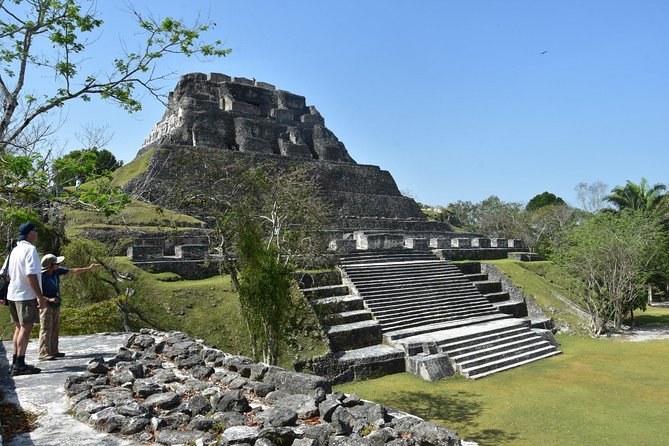
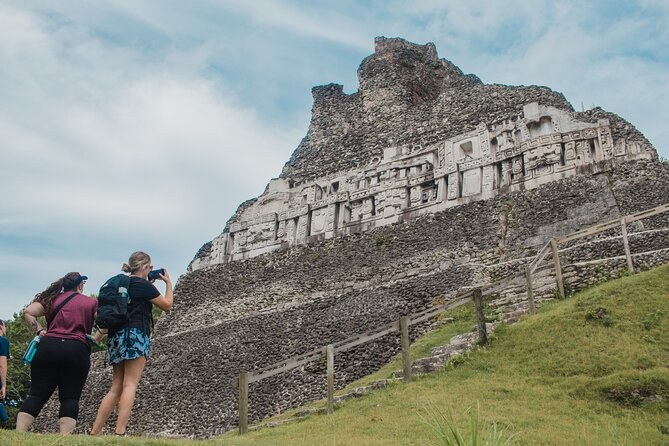
Private Tour to Maya Sites Xunantunich and Cahal Pech
PrivateFees includedHotel pickup
From $175 per person